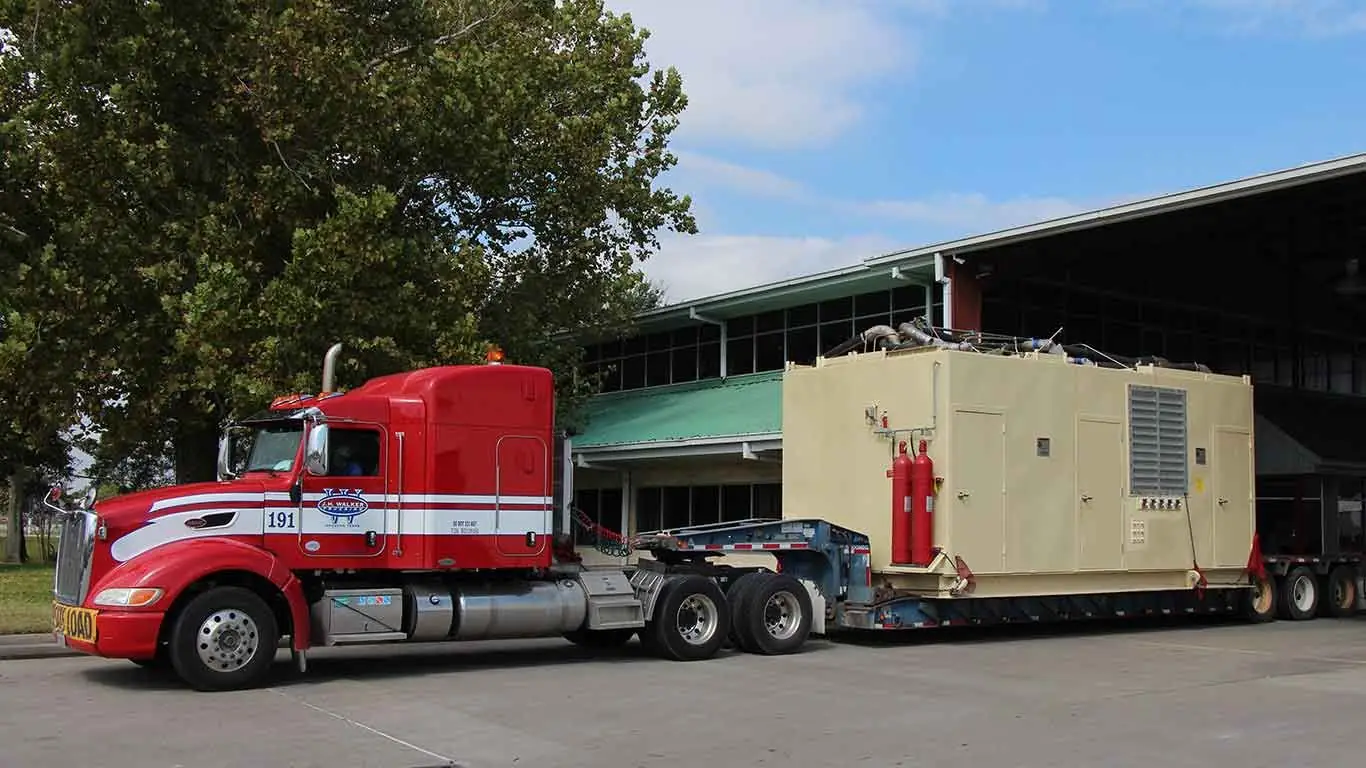
Heavy haul. Up to 150,000 lbs.

Industrial machinery, construction equipment, compressors, vessels and drilling equipment that won’t fit a standard deck, moved on our own drop-deck trailers by experienced heavy haul drivers.

top cargo weight on multi-axle
150,000 lb
drop-deck trailer types in our fleet
4
dispatch, day and night
24/7
heavy haul since Stewart & Stevenson
2003

Legal or permitted

Bigger than the box? We permit it.

A load that fits inside the legal envelope rides on a standard schedule. Anything wider, taller, longer or heavier needs state permits, a planned route and, often, escorts and daylight-only travel. Our dispatch orders the permits and works through that planning with you.

  • Legal width8 ft 6 in
  • Legal height, Texas14 ft
  • Legal height, Louisiana and Oklahoma13 ft 6 in
  • Legal gross weight80,000 lb
LEGAL ENVELOPE YOUR LOAD HEIGHT DOUBLE DROP
Past the dashed line, the move needs permits. Legal limits shown are the common state and federal figures; each permit sets its own.

The trailers

Four drop decks. One will fit.

Whole fleet
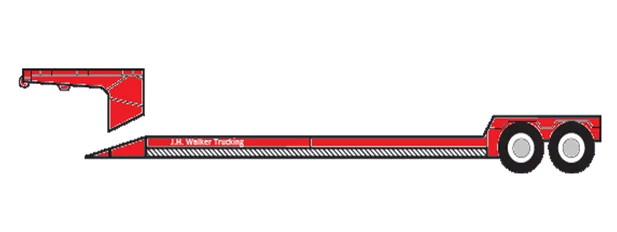
Line drawing of a Double drop trailer

Double drop

Deck
10 ft · 29 ft well · 9 ft
Legal payload
40,000 lb

Best for tall equipment that needs the lowest deck height.
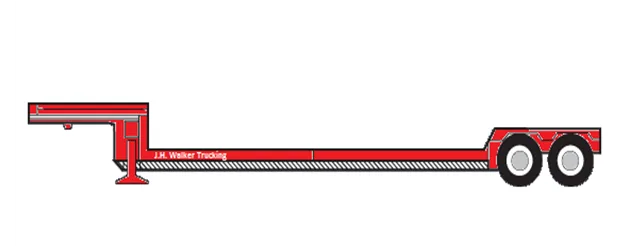
Line drawing of a Removable gooseneck trailer

Removable gooseneck

Deck
29 ft well · 9 ft rear
Legal payload
42,000 lb

Best for machinery that drives on over the detached front.
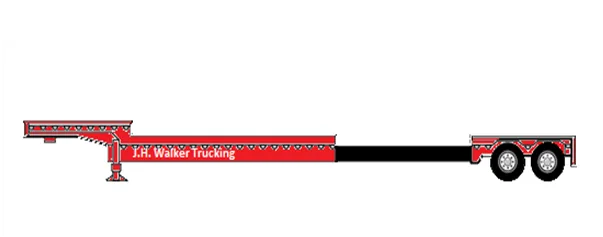
Line drawing of a Stretch single drop trailer

Stretch single drop

Deck
37 ft, extends to 65 ft
Legal payload
38,000 lb

Best for long loads: vessels, beams and pipe spools.
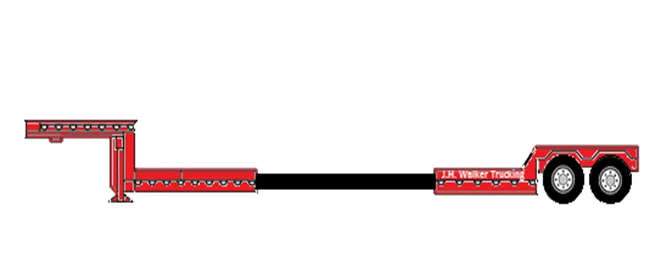
Line drawing of a Stretch double drop trailer

Stretch double drop

Deck
59 ft well
Permitted payload
80,000 lb

Best for loads that are both tall and long.

How a heavy move runs

Planned before it’s picked.

The heavy part is the planning: the route, the permits, the escorts and the securement, worked out with you ahead of the move.
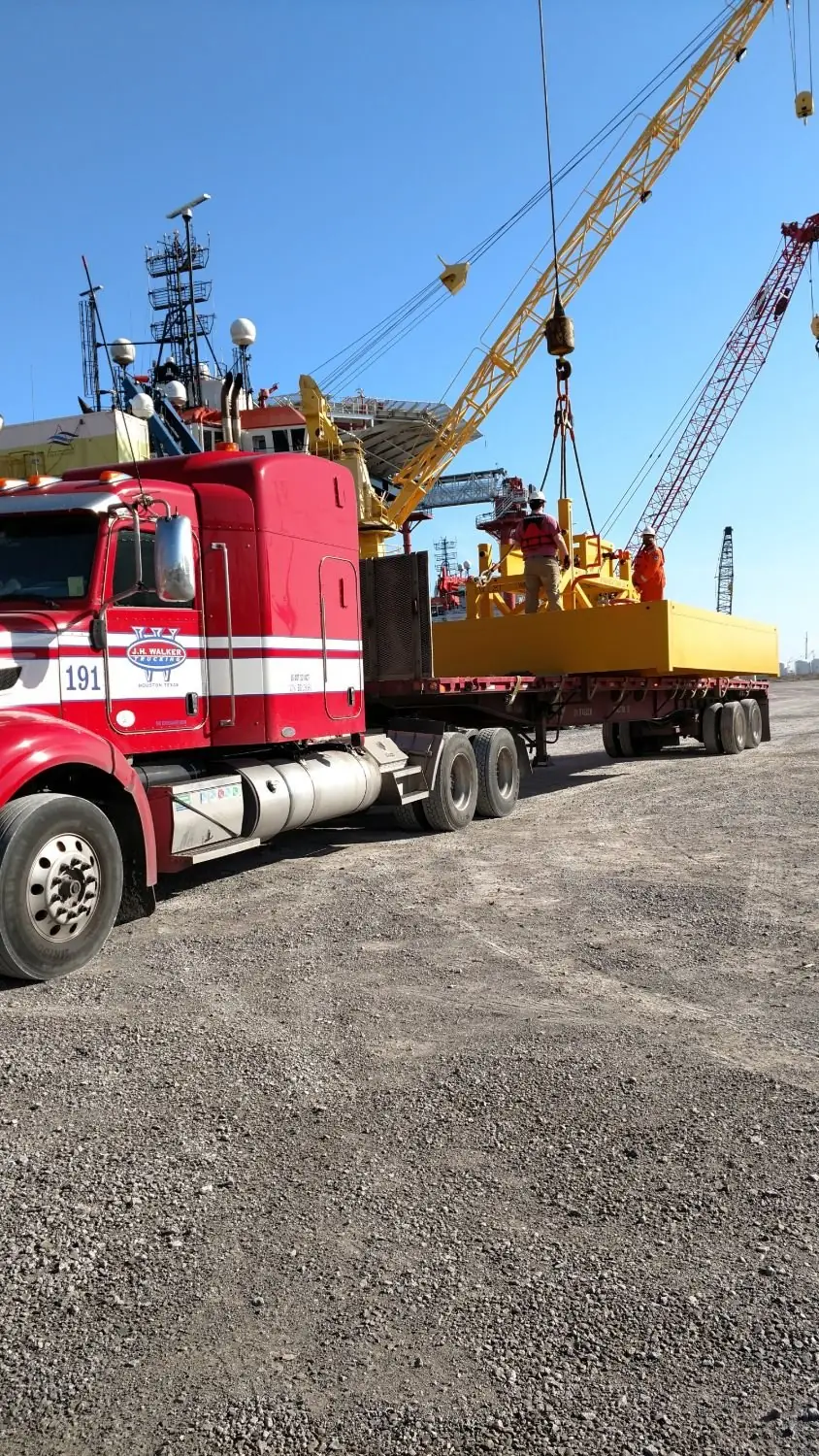
A crane setting a yellow skid onto a J.H. Walker flatbed at a Gulf Coast dock, beside an offshore vessel
  1. 01 Survey the loadDimensions, weight, center of gravity and pick points, with photos if you have them.
  2. 02 Match the trailerThe deck height, well length and axle count that carry it legally or with the fewest permits.
  3. 03 Permits and routeState oversize and overweight permits, bridge and clearance checks, and a route each state approves.
  4. 04 Escorts and windowsPilot cars where the permit calls for them, and travel inside each state’s daylight and curfew rules.
  5. 05 Load and secureChains, binders and edge protection, with the flags and lights the permit calls for.
  6. 06 Move and trackLive GPS in the client portal, and dispatch you can reach 24/7.
  7. 07 Deliver and signAn electronic proof of delivery, filed to your account the minute it’s signed.

Questions shippers ask

Heavy haul, answered.

How heavy can you go?

Up to 150,000 lbs of cargo on our multi-axle configurations. Send the weight and dimensions and dispatch will match the trailer and axle count.

Do you handle the permits?

Yes. Our dispatch orders the state oversize and overweight permits and plans the route, escorts and travel windows each permit requires.

How much notice do you need?

It depends on how far past the legal limits the load is. Something just over size usually needs a couple of days to permit. The bigger the load, the longer the lead time, and the largest moves can take several weeks to permit and plan. Send dispatch the dimensions and weight, and we will give you a date.

Can you cross state lines?

Yes. Most of our heavy loads run in Texas, Louisiana and Oklahoma, and we run Alabama, Mississippi and Florida regularly too.

Can you load at a plant, job site or well site?

Yes. Our safety team works with yours on the site’s requirements, and our drivers are trained in load securement.

Send the dimensions. Get the plan.

Length, width, height and weight are enough to start. A heavy haul planner calls you back with the trailer, the permits and the price.

Plan my move